27.12.20
My First Type Theory
Who knew? Add eyeballs and rhymes, and type theory becomes cute! An introductory video by Arved Friedemann.


14.12.20
Hokusai's "The Great Wave" recreated in Lego

Brilliant! Spotted via Boing-Boing.
Lego Certified Professional Jumpei Mitsui brought Hokusai's iconic ukiyo-e woodblock print "The Great Wave off Kanagawa" (c. 1829-1833) into the Lego realm. Marvel at this incredible work in Osaka's Hankyu Brick Museum.
9.12.20
A Year of Radical No's

Sue Fletcher-Watson describes her plan for A Year of Radical No's and follows up with Nine Months of Saying No – an update. Thanks to Vashti Galpin for the pointer!
So my main fear was that this Strategic Leadership Course would try to feed me time management tips, taking up 6 precious days of my time, when what I need is just LESS WORK. Thank the lord, far from it. ... One session left a particularly strong impression on me. We spent some focused time considering the work-life balance challenges of another person on the course, culminating in offering them some advice. My advice? Say No, for a whole year, to everything new. Conferences, training, collaborations, journal reviews, student supervisions, the whole lot. Their response? Laughter. None of us could imagine doing such a thing.

7.12.20
"This must be your first"

Zeynip Tufekci, writing in The Atlantic, explains why Trump's ludicrous attempt at a coup cannot be laughed away.
The next attempt to steal an election may involve a closer election and smarter lawsuits. Imagine the same playbook executed with better decorum, a president exerting pressure that is less crass and issuing tweets that are more polite. If most Republican officials are failing to police this ham-handed attempt at a power grab, how many would resist a smoother, less grossly embarrassing effort?
(Image from Tom the Dancing Bug.)
6.12.20
A Tale of Two Pandemics

A Tale of Two Pandemics: A graphic summary explaining how and why communities of colour suffer more from Covid. Spotted via BoingBoing.
22.10.20
1.9.20
English universities are in peril because of 10 years of calamitous reform

Stefan Collini writes in the Guardian.
Then there is the rather less obvious contradiction between consumerism and education. Our higher education system is at present structurally consumerist. Even now, it is not widely understood how revolutionary were the changes introduced in 2010-12 by the coalition government in England and Wales (Scotland wisely followed another course). It wasn’t simply a “rise in fees”. It was a redefinition of universities in terms of a market model. The Office for Students is explicitly a “consumer watchdog”. Consumers are defined by their wants; in exchange for payment they are “entitled” to get what they ask for. ...
Universities are, by a long way, the main centres of research and scholarship in our societies; they curate the greater part of our intellectual and cultural inheritance; they provide by far the best source of disinterested expertise; they select and prepare those who will be the scholars and scientists of the future, and so on. Countries all over the world have found that you cannot fulfil these functions by distributing students and academics across all institutions either uniformly or randomly. Some element of selection and concentration is needed, and that brings with it some element of hierarchy, however unofficial. Explicit differentiation of function among higher education institutions might well be preferable to any pretence that they are all doing the same thing and doing it equally well.
27.8.20
Six questions that predict success
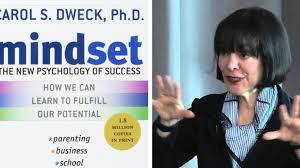
Carol Dweck, a Stanford psychologist famous for her research on growth mindset, is coauthor of a new study.
To test the theory, the researchers asked student participants six questions and asked them to rate themselves on a 1 (never) to 5 (always) scale.
- When you are stuck on something, how often do you ask yourself, "What are things I can do to help myself?"
- Whenever you feel like you are not making progress, how often do you ask yourself, "Is there a better way of doing this?"
- Whenever you feel frustrated with something, how often do you ask yourself, "How can I do this better?"
- In moments when you feel challenged, how often do you ask yourself, "What are things I can do to make myself better at this?"
- When you are struggling with something, how often do you ask yourself, "What can I do to help myself?"
- Whenever something feels difficult, how often do you ask yourself, "What can I do to get better at this?"
What happened? Higher scores predicted higher grades.
And in subsequent studies, higher scores predicted greater success in a professional challenge and in a health and fitness goal.
21.8.20
Five stages of accepting constructive mathematics

From a psychological point of view, learning constructive mathematics is agonizing, for it requires one to first unlearn certain deeply ingrained intuitions and habits acquired during classical mathematical training. In her book On Death and Dying psychologist Elisabeth Kubler-Ross identified five stages through which people reach acceptance of life’s traumatizing events: denial, anger, bargaining, depression, and acceptance. We shall follow her path.
Five stages of accepting constructive mathematics is a nifty introduction to constructive mathematics by Andrej Bauer. Mentioned by Martin Escardo on the Agda mailing list.
13.8.20
Positive Obsession and Furor Scribendi

I've just completed reading a trio of books by Octavia Butler: The Parable of the Sower, The Parable of the Talents, and Bloodchild and Other Stories. The latter contains two essays, Positive Obsession and Furor Scribendi, which I heartily recommend. Replace writer by researcher and everything remains true.
Persistence is essential to any writer--the persistence to finish your work, to keep writing in spite of rejection, to keep reading, studying, submitting work for sale. But stubbornness, the refusal to change unproductive behavior or to revise unsalable work can be lethal to your writing hopes.Octavia Butler, "Furor Scribendi"
Subscribe to:
Posts (Atom)