A master class from Patrick Winston of MIT on how to present ideas clearly. Chockfull of useful advice, much of which I've not seen elsewhere. Recommended.
27.4.22


7.4.22
Vote!
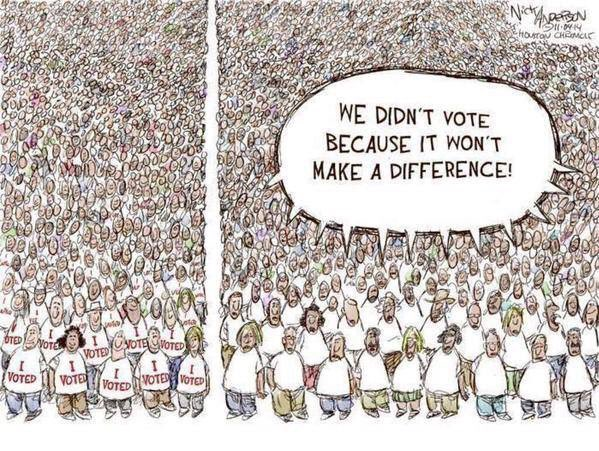
It's time once again! The below is copied from https://www.gov.uk/register-to-vote. The site is easy to use and registration takes less than five minutes. I'll be voting for the Scottish Green Party.
Deadline for registering to vote in the 5 May 2022 elections
Register by 11:59pm on 14 April to vote in the following elections on 5 May:
- local government, combined authority mayoral, mayoral and parish council elections in England
- local government and community council elections in Wales
- Northern Ireland Assembly election
Register by 11:59pm on 18 April to vote in the local government elections in Scotland on 5 May.
Who can register
You must be aged 16 or over (or 14 or over in Scotland and Wales).
You must also be one of the following:
- a British citizen
- an Irish or EU citizen living in the UK
- a Commonwealth citizen who has permission to enter or stay in the UK, or who does not need permission
- a citizen of another country living in Scotland or Wales who has permission to enter or stay in the UK, or who does not need permission
Check which elections you’re eligible to vote in.
You can vote when you’re 18 or over. If you live in Scotland or Wales, you can vote in some elections when you’re 16 or over.
You normally only need to register once - not for every election. You’ll need to register again if you’ve changed your name, address or nationality.
Register online
It usually takes about 5 minutes.
30.3.22
Programming language to the stars

TIL that my students can choose among about forty different firms interested in hiring Haskell programmers. Among them is Co-Star, a firm that provides horoscopes to millions of users, which has put up a page detailing why they choose Haskell over other languages. Thanks to Alex Wasey and Dylan Thinnes for the pointer.
3.3.22
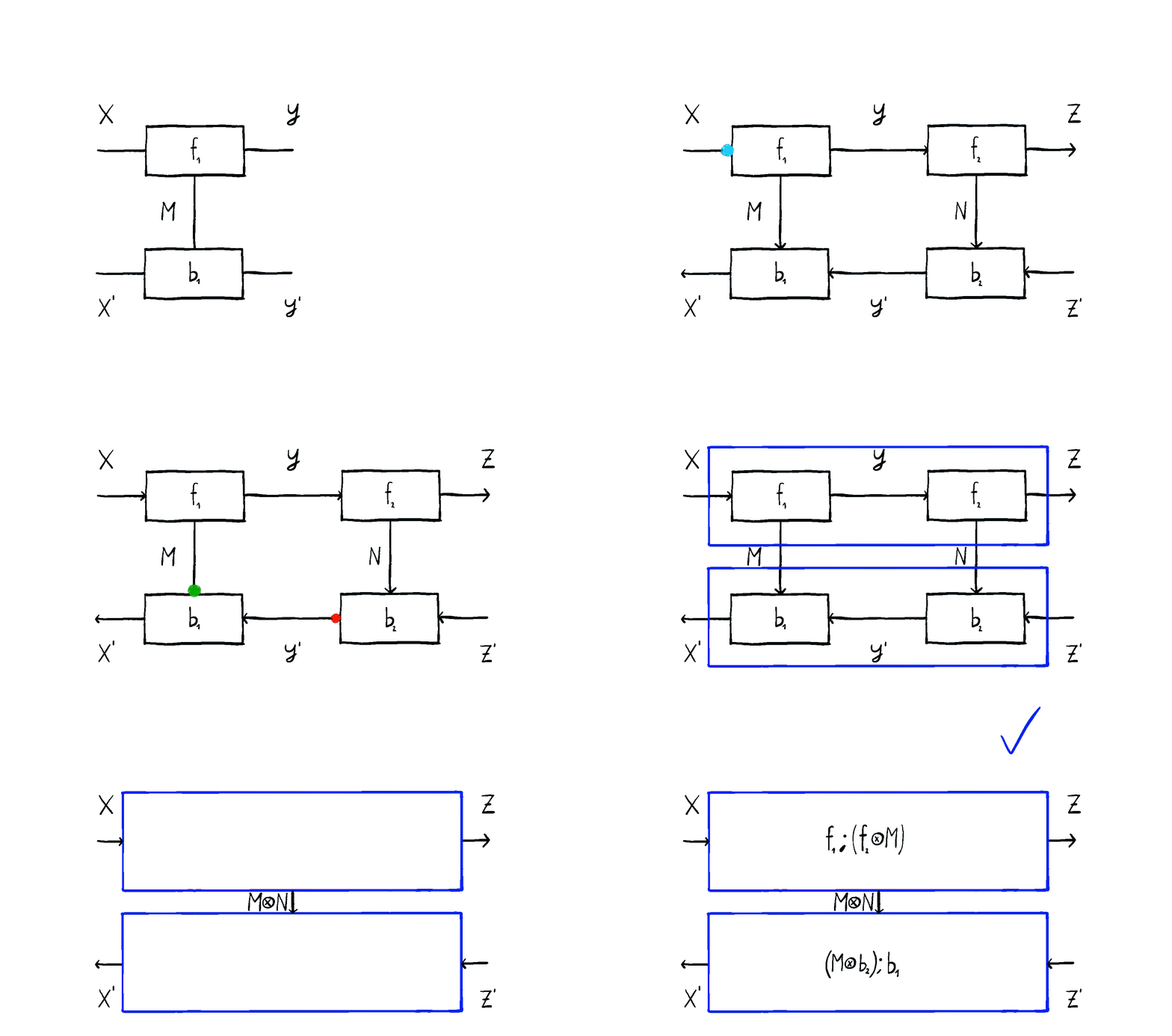
Optics vs Lenses, Operationally
10.1.22
Gödel, Animated
A five-minute primer on Gödel and incompleteness, courtesy of Marcus du Sautoy and TED-Ed. While not named, the fellow in the hat disgruntled by the discovery is clearly Hilbert.
5.1.22
Beyond the Scope

6.9.21
Concurrency, State, and Cardano

After months of testing with smaller groups, the Cardano public testnet was recently upgraded to support smart contracts. The surge of activity that followed included many dApp tests and experiments, with developers eager to perform a large-scale test and show off their hard work. This effort has created a ferocious discussion around some of the design decisions behind Cardano. Many critics are using this discussion as an opportunity to point to Cardano, misrepresent the problem, and ultimately underestimate the potential of one of the giants of the crypto industry. Misconceptions are now floating around suggesting that Cardano only supports one transaction per block, only one user can interact with a smart contract at a time, and that cardano is ultimately destined for centralization. All of these are inaccurate, and we present below a new framing and the start of a few solutions that dApp builders might choose.
5.9.21
Reading list


Kevin Doran wrote to me requesting a reading list on logic. He recommends an introductory guide to logic by Peter Smith. Smith's appendix lists several textbooks on logic, but misses my two favourites.
- Jean-Yves Girard, Yves Lafont, and Paul Taylor. Proofs and Types. CUP, 1989. The master logician (discoverer of System F and linear logic), aided by two superb computer scientists, covers the basics. Explains additive and multiplicative proof rules, and the fundamentals of propositions as types.
- Jean van Heijenoort, From Frege to Gödel A Source Book in Mathematical Logic, 1879-1931, Harvard University Press, 1967. My favourite entry is the correspondence between Russell and Frege---it is only a few pages long and so a quick read; don't skip van Heijenoort's introduction. See also Anita Feferman's biography of van Heijenoort, who lived quite a life: he served as Trotsky's secretary and was shot to death by a jealous lover.
29.7.21
Time to say goodbye to our heroes?

Reorienting our focus from the hero model’s “big people” to the consideration of big questions will address many of the challenges plaguing universities today: incremental, derivative, low-risk science; faltering funding; relentless focus on quantity of publication; irreproducible research; ongoing complaints of harassment; lack of diversity; an atmosphere that leaves students struggling with mental health; and (despite enormous funding outlays) an inadequately trained workforce in the STEM fields of science, technology, engineering, and math.
Subscribe to:
Posts (Atom)